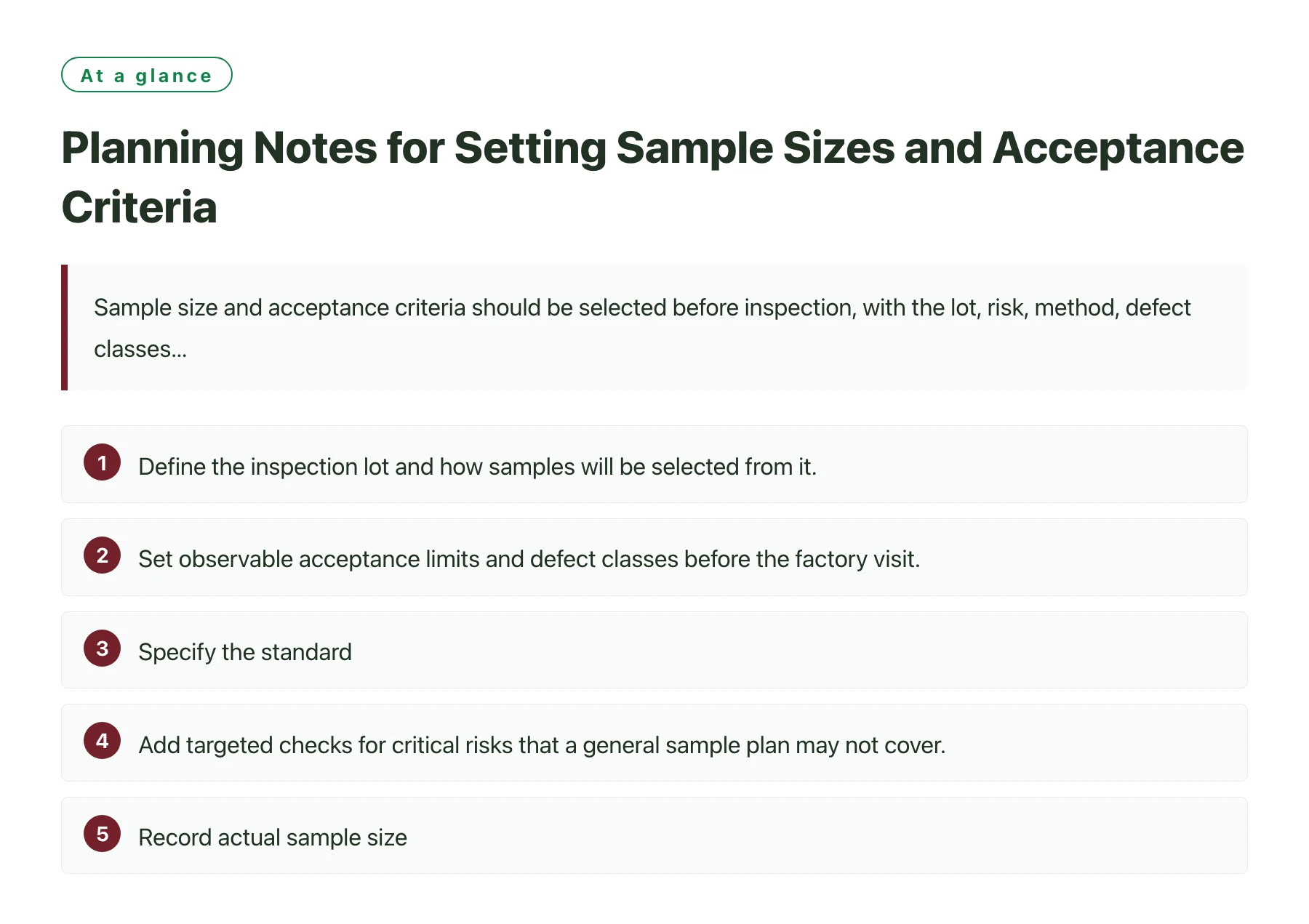
Sample size and acceptance criteria should be selected before inspection, with the lot, risk, method, defect classes, and decision authority clearly defined. A sample plan offers a structured way to make a lot decision from examined units; it does not guarantee that every unexamined unit is conforming. Buyers should set product-specific critical requirements separately and ensure inspectors can apply the agreed method consistently.
Key takeaways
- Define the inspection lot and how samples will be selected from it.
- Set observable acceptance limits and defect classes before the factory visit.
- Specify the standard, edition, inspection level, plan, and accept or reject rule.
- Add targeted checks for critical risks that a general sample plan may not cover.
- Record actual sample size, results, limitations, and authorized disposition.
Sample planning is a contract and risk decision, not a number chosen at the inspection table.
1. Define what is being sampled
Describe the lot using product code, model, size, color, production site, production period, and quantity. State whether mixed variants form one lot or must be separated. Goods produced on different lines, with different materials, or at different times may need separate consideration when those differences affect risk or traceability.
Set readiness conditions: the lot must be finished, accessible, identified, and available for random selection. If the order is incomplete, cartons are hidden, or records do not show lot boundaries, document that limitation. A sample selected from only the easiest cartons may not represent the whole lot, so agree how the inspector will reach units across pallets or production groups.
2. Translate the purchase specification into criteria
For each requirement, state the check method, sample unit, tolerance or pass condition, evidence, and defect category. Dimensions need drawing references, units, and measurement points. Functional checks need an operating sequence and expected result. Visual checks need defined conditions and examples where appearance affects acceptance. Packaging checks should identify marks, protection, and count rules.
Separate mandatory requirements from preferences and assign a decision owner to each. Critical product or safety requirements may need dedicated verification beyond a general attribute sampling plan. If the purchase order lacks a value or method, resolve it before sampling. Inspectors should not invent acceptance criteria based on personal expectations or a supplier’s standard catalogue.
3. Choose a plan that fits the lot and risk
Identify whether the project uses a contractual sampling standard, a customer plan, or a product-specific scheme. ISO 2859-1:2026 covers AQL-indexed sampling schemes for lot-by-lot inspection by attributes. The parties still need to define lot size, inspection level, scheme, defect categories, and accept or reject numbers. Have the quality owner select the plan based on order risk and contract needs. [1]
Do not describe AQL as a guaranteed defect percentage in the delivered lot or as proof that each unexamined unit conforms. It is an input to a defined sampling scheme and decision process. For a specialized or safety-critical feature, a technical owner may require a separate test, tighter control, or other verification regardless of a sample plan’s lot decision.
4. Decide how samples are selected
State who selects samples, when selection occurs, and how randomness or coverage is achieved. If cartons are sampled, define how carton IDs are chosen and whether units come from multiple pallets, production dates, or variants. Record the planned sample count and the actual count. If substitutions or inaccessible packages prevent selection, explain why and get approval for a revised method.
Avoid convenience samples chosen by the supplier or inspector without a documented basis. Keep samples traceable to carton, lot, and position where relevant. For destructive tests, agree how many units may be consumed, how replacement quantity is handled, and whether test samples need a separate chain of custody.
5. Classify findings and set acceptance rules
Define critical, major, minor, cosmetic, functional, or other defect categories using the product and buyer’s risk. A critical defect may have a zero-acceptance rule or a special escalation path even when the broader lot uses a statistical plan. State how repeated defects in one unit are counted, how mixed defects are aggregated, and how a finding affects related models or batches.
Write the decision rule so two reviewers using the same result would reach the same conclusion. Include accept and reject conditions, treatment of missing documents, retesting limits, and whether a conditional decision is permitted. Do not let the supplier negotiate an acceptance threshold after results are known unless the buyer formally approves a documented deviation.
6. Plan measurement quality and inspection competence
Specify instruments, calibration or verification needs, measurement environment, method, and inspector qualification where relevant. Ensure the gauge can resolve the tolerance being checked. For subjective appearance decisions, use agreed reference samples, lighting, viewing distance, and defect examples. Record readings and evidence rather than writing only a summary status.
A sampling plan cannot compensate for an unsuitable test method or inconsistent execution. If a result is near a limit, identify the contract’s rule for rounding, repeat measurements, or technical review before inspection starts. Use a laboratory or specialist when the characteristic requires competence or equipment the field inspector does not have.
7. Specify reporting and disposition
The inspection report should identify lot, sample IDs, planned and actual counts, methods, results by requirement, defect classification, limitations, and decision. Link photographs, measurements, and document checks to exact units. If the planned sample was not achieved, show the difference and who approved the change. A bare “pass” can hide a skipped check or an unexamined lot boundary.
Name who can accept, reject, require sorting, order rework, or authorize a concession. Define whether a failed lot may be re-presented after corrective action, how the new sample is selected, and what evidence is required. Keep the initial failure, corrective action, reinspection, and final release together so the order history is complete.
8. Review the plan after delivery
Compare sample results with receiving defects, customer complaints, warranty issues, and returns. If a plan frequently misses a certain defect or creates repeated disputes, review the lot definition, method, sample coverage, acceptance criteria, and factory controls. Do not change sample size simply to obtain a desired pass rate; adjust the plan based on risk, contract, and evidence.
Use the revised method consistently and communicate it before the next inspection. Buyers planning finished-goods inspection before shipment can align sample rules with purchase specifications and hold points before production closes. Final shipment approval should consider open technical, document, quantity, and commercial decisions beyond the sample result.
Sources
Frequently asked questions
Who should choose the sample size?
The buyer’s quality or technical owner should select it with the supplier before inspection, considering lot definition, contract, product risk, standard, inspection level, and acceptance rule.
Does AQL mean the lot may contain that exact percent defective?
No. It is used within a defined sampling scheme and decision process. It does not guarantee a lot’s exact defect percentage or conformity of every unexamined unit.
Can one sample plan cover critical safety features?
Not automatically. Define critical requirements separately and use product-specific tests or controls when the technical or regulatory owner determines they are needed.
What happens if the planned sample cannot be selected?
Record the reason, actual sample, and affected lot coverage. Obtain approval for a revised method or classify the inspection as incomplete rather than implying full coverage.